medtests.de · Advisory board
Scientific and medical advisory board
medtests.de offers guidance, not a diagnosis. To make that guidance hold up, selected tests and articles are backed by licensed physicians, and for sport and load related topics by specialists from sports therapy. They check how a result is framed, point to the relevant guidelines, and make sure a score prompts action instead of calming you down or scaring you.
-
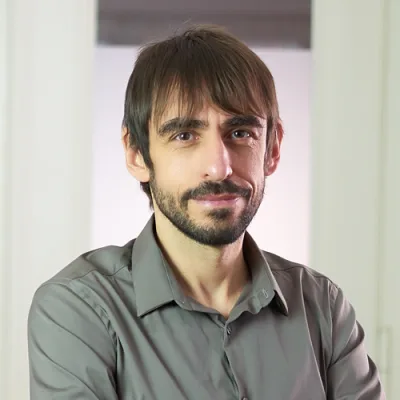
Dr. Georg Mekras
Physician and health advisor · Focus on holistic and functional medicine · Gut health, microbiome and SIBO
Dr. Mekras works with gut symptoms that slip through standard diagnostics: bloating, alternating bowel habits, exhaustion, while blood work, ultrasound and colonoscopy stay unremarkable. His subject is small intestinal bacterial overgrowth (SIBO), the breath tests that go with it, and microbiome analysis. On mekras.de he explains how these pieces fit together and offers a free screening (in German).
His core ideaHealth starts on the inside, and largely in the gut. For a share of people carrying an irritable bowel label, the driver is bacterial overgrowth in the small intestine that routine diagnostics never picks up. Anyone who only gets the label should be allowed to keep asking instead of settling into it.
Topics he backs on medtests.de: gut health, irritable bowel syndrome and SIBO.
-

Dr. med. Heinz Bry
Physician licensed in Germany · Specialist in general medicine · Sports and nutritional medicine · Focus on metabolism
Dr. Bry is a family doctor with a focus on sports and nutritional medicine, so on preventing problems rather than only treating them. A large part of his consultations are check-ups and the long term care of people with metabolic conditions. He runs the patient education project fettleber-verstehen.de with a free, guideline-based guide to fatty liver disease (in German).
His core ideaFatty liver is often the first visible sign, before insulin resistance and diabetes follow. In early stages it can frequently be reversed, provided you look early and deal with the drivers.
Topics he backs on medtests.de: the fatty liver test with lab scores (in German).
-

Dr. med. Jost-Hendrik Hübner
Specialist in surgery · Nutritional medicine · LipoClinic Dr. Heck · Focus on lipedema
Dr. Hübner treats women with lipedema at LipoClinic Dr. Heck, a painful fat distribution disorder that is often misread as plain excess weight for years. The lipedema self-check on medtests.de is based on a specialist interview with him and on the guideline sources linked on the test page. His profile at LipoClinic introduces him and his work.
His core ideaThe decisive sign is pain, not the amount of fat tissue. If you notice tenderness to pressure, bruises that appear easily and a symmetrical pattern on legs or arms, get it checked properly instead of thinking about diets.
Topics he backs on medtests.de: the lipedema test.
-
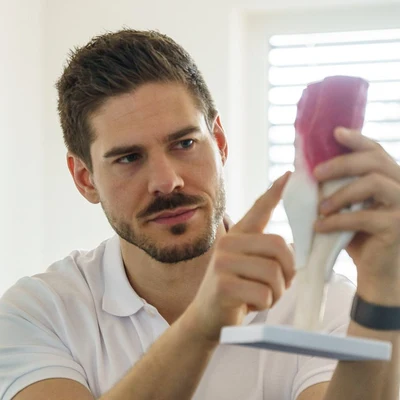
Nils Heim
Sports therapist and athletic trainer · Co-founder and lecturer at the German Academy for Strength and Conditioning Coaches · Focus on tendon pain in athletes
Nils Heim works with athletes whose patellar or Achilles tendon pain has stayed for years, often after physiotherapy, shockwave therapy, injections and long breaks. He studied sports science at the University of Mainz, worked in the medical training therapy unit of a joint centre and spent six years as athletic coach for the youth football teams of TSV Schott Mainz. On nilsheim.de he shows how an irritated tendon can be built back up (in German).
His core ideaA tendon does not care what someone used to handle. What counts is what it tolerates today. That is why complete rest is rarely the answer, it lowers capacity even further. The way back into sport runs through dosed, deliberately increasing load.
Topics he backs on medtests.de: patellar tendinopathy and Achilles tendon pain (in German).
How the advisory board works
Board members back the topics in their own field: they weigh up the screening instruments we use, watch that we stay close to the guidelines, and make sure the limits of a self-test stay visible. For sport and load related topics the view from sports therapy comes on top, meaning training load and return to sport. This kind of backing does not replace a medical examination, and nobody on the board makes a remote diagnosis. Names appear here only with the explicit consent of the person concerned.